Handling Difficult Situations: Scripts for High-Stakes 1:1s
Exact conversational scripts and psychological frameworks for de-escalating tension, tears, critical feedback, and ultimatums.
Why This Meeting Matters
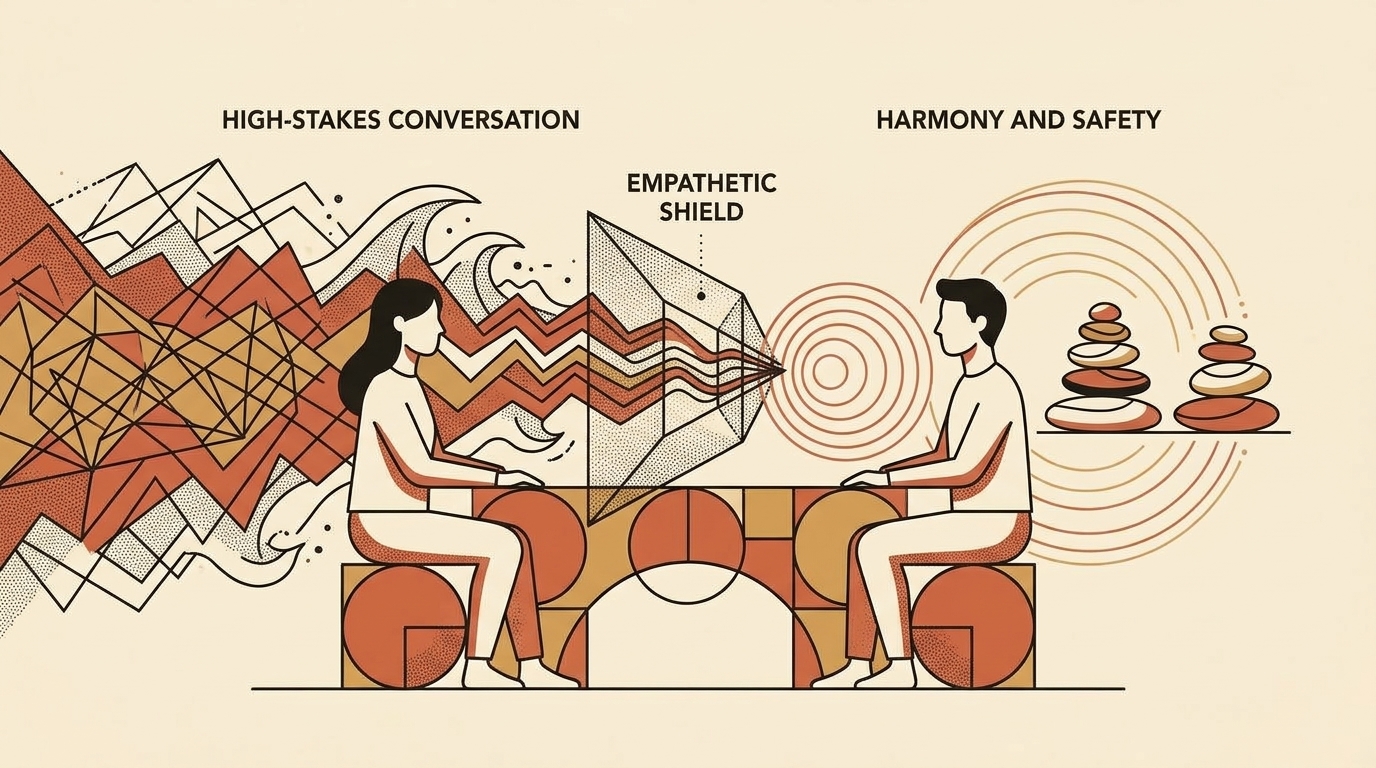
The Real Test of Leadership: Anyone can run a 1:1 when sprints are green and promotions are flowing. The true test of managerial skill and human maturity arrives when conversations get uncomfortable: an engineer goes silent, someone breaks into tears, or a critical performance intervention is required.
Psychological Safety Under Pressure: In difficult moments, the natural human reaction is defensiveness, blame, or avoidance. When leaders panic, trust evaporates. Navigating these conversations requires radical empathy, objective anchoring, and deliberate conversational pauses.
Confidentiality as a Safe Harbor: Emotional vulnerability cannot survive without guaranteed confidentiality. Difficult conversations must never be recorded, and notes must remain strictly encrypted under client keys.
Before the Meeting: Preparation & Invitation
Pre-Conversation Checklist:
1. Check Sparklines & Feeling Tags: Look at recent mood and workload trends to diagnose whether this is an acute spike or chronic burnout.
2. Anchor to Observable Facts: Separate objective behaviors from subjective judgements. Write down dates, specific PRs, or concrete incidents.
3. Prepare Your Private Notes: Use the Private Notes column in encrypted1on1 to jot down your conversational anchors and hypotheses. Never share private diagnostic notes.
4. Clear Calendar Buffers: Ensure you have at least 15 minutes of free calendar after the meeting so you are not forced to rush an emotionally charged conversation.
Recommended Agenda & Questions
Scenario 1: The "I’m Fine" Stonewall (10 min)
Navigating terse, defensive one-word answers when work is visibly slipping.
- Script: "I hear you saying things are fine, but I’ve noticed a pattern over the past couple of weeks: standups feel subdued, and that Auth service PR seems unusually heavy."
- Script: "I’m not bringing this up to evaluate you or push you. My job is to protect your momentum. When things get quiet like this, it usually means there is a hidden blocker or you are carrying too much alone."
- Script: "What is one thing that has been more exhausting than usual this sprint? (Then stay silent for 7 seconds)."
Scenario 2: Delivering Critical Performance Feedback (15 min)
Addressing poor code quality or abrasive communication using the SBI model.
- Situation: "During Tuesday's code review on the Payment Gateway refactoring..."
- Behavior: "...when Jordan asked about the fallback logic, your response was: 'Read the docs, I don't have time to explain basics.'"
- Impact: "...which caused Jordan to shut down, slowed down review cycles, and damaged team safety."
- Alternative & Partnership: "Maintaining collaborative review culture is just as vital as velocity. What was going on for you in that moment?"
Scenario 3: Emotional Distress & Tears (10 min)
Holding compassionate space when a direct report breaks down under stress.
- Script: "Hey, take your time. There is absolutely no rush, and you have nothing to apologize for. We work with complex, stressful systems, and we are all human beings first."
- Script: "Would you like to take a 5-minute break, grab a glass of water, and come back? Or would you prefer to reschedule the rest of our chat to tomorrow? Whatever you need is completely okay."
- Rule: Never record the call. Focus exclusively on listening and emotional safety, not immediate problem-solving.
Scenario 4: Immediate Raise or Promotion Demands (10 min)
Responding to sudden financial or title ultimatums constructively.
- Script: "Thank you for being direct with me about where your head is at. I really value your ambition, and I want to make sure you feel fairly rewarded for your impact here."
- Script: "I cannot give you an instant 'yes' today on title or budget, because promotions involve our leveling rubric and executive calibration. What I CAN promise you is 100% transparency."
- Script: "Let's open our Senior rubric together, map where your contributions hit the mark and where the gaps are, and take that gap analysis to leadership for the upcoming cycle."
Scenario 5 & 6: Micromanagement Accusations & Cynicism (10 min)
Calibrating visibility versus autonomy and addressing organizational cynicism.
- Micromanagement Script: "Thank you for telling me directly. If my check-ins feel like micromanagement, our communication has a breakdown. What update cadence gives me the context to protect you without making you feel policed?"
- Cynicism Script: "I understand why this architectural pivot feels jarring after all our hard work. Here is the market context driving this decision... What architectural risks do you foresee and how can we mitigate them?"
Common Anti-Patterns to Avoid
The "Praise Sandwich" (Compliment–Criticism–Compliment)
Dilutes critical feedback. The employee leaves thinking they are doing great, while the manager assumes they delivered tough guidance.
Deliver clear, compassionate SBI feedback directly. Be concise, transparent, and focus on collaborative partnership.
Counter-Attacking Defensively
When an employee accuses you of micromanaging or complains about company strategy, reacting with anger obliterates psychological safety.
Thank them for their candor, acknowledge the friction calmly, and invite them to co-design the solution.
Making Reckless Promises to Pacify Tears or Demands
Promising promotions or budget out of discomfort creates catastrophic betrayal when upper management rejects the request.
Offer empathetic listening and complete procedural transparency, but never guarantee executive decisions unilaterally.
Minimizing Emotional Distress ("Don’t cry, it’s fine!")
Telling someone not to cry invalidates their authentic emotional reality and increases their embarrassment.
Offer a pause, normalize their feelings as human, and give them the choice to take a break or reschedule.
After the Meeting: Follow-up & Momentum
1. Deliver Immediate Unblocking within 24 Hours: If a tough conversation revealed systemic burnout or tooling friction, take visible action to unblock them immediately. Resolving even one friction point proves that vulnerability is safe and rewarded.
2. Document Objectively in Private Notes: Capture factual timelines and promised support in your device-encrypted Private Notes. Never store sensitive personal disclosures on unencrypted corporate drives.
3. Schedule a Gentle Follow-up: In emotionally charged cases, schedule a brief 15-minute coffee check-in 3–5 days later to re-anchor psychological safety and calibrate ongoing momentum.
Key Guidance for Managers
- Count to 7 in silence after asking a deep diagnostic question: vulnerable truths need space to surface.
- Always separate performance coaching from compensation negotiations.
- Remember that defensiveness is almost always a protective armor born of stress or unclear expectations.
- Use the support_checkin template in encrypted1on1 whenever chronic overload or burnout is detected.
Core Principle
Difficult conversations do not ruin working relationships; mishandled conversations do. Navigated with empathy, calm listening, and mathematical confidentiality, high-stakes moments become the bedrock of high-trust teams.