The Manager’s Playbook: Leading High-Impact 1:1s
Mindset, 15-minute preparation checklist, active listening, the SBI feedback model, and building real sponsorship.
Why This Meeting Matters
From Status Cop to Multiplier: If you recently stepped into leadership, your biggest temptation is using 1:1s to ask what people are working on. Resist this impulse with every fiber of your being. Tasks belong in Jira or GitHub; 1:1s are strictly for energy, systemic blockers, and direction.
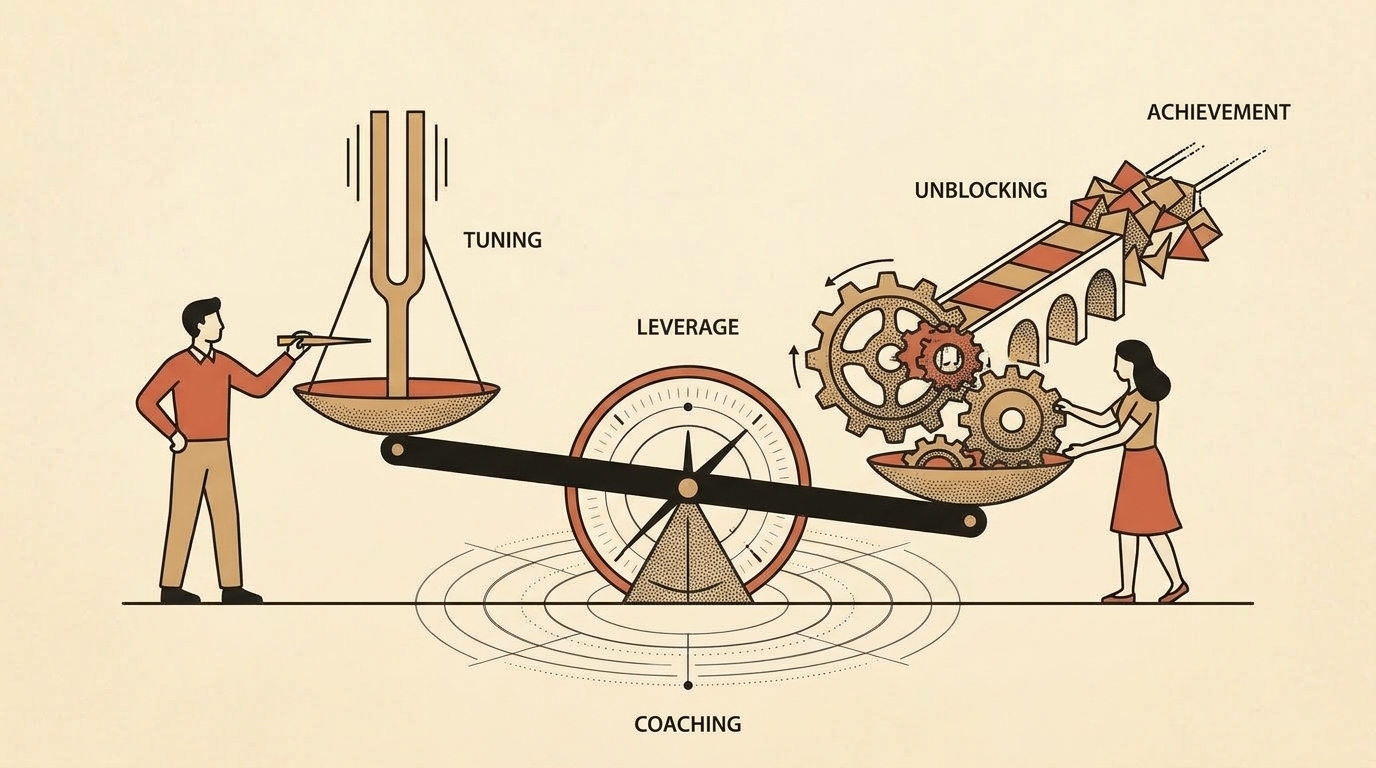
The Andy Grove Leverage Formula: In High Output Management, Andy Grove demonstrated that 90 minutes of thoughtful 1:1 time enhances an engineer’s output for 80 hours between cycles (>50x ROI). Your purpose is not to inspect work, but to remove obstacles standing between your team and their best work.
The 80/20 Listening Equation: A manager talking 70% of the time is a lecture, not a partnership. The direct report must speak ~80% of the time. Your tools are open inquiry, deliberate silence, and taking notes.
Continuity & Trust: Promises made in conversation and forgotten by Monday breed cynicism. Real managerial credibility is forged when action items survive across cycles and unresolved blockers are tracked until closed.
Before the Meeting: Preparation & Invitation
Step 1: Context Scanning (10–15 min before): Review operational signals over the past two weeks without micromanaging. Did a pull request languish in review for 5 days? Were there commits past 22:00 or over the weekend? Was there a rough on-call shift? Use these facts to calibrate empathy, not to accuse.
Step 2: In-App encrypted1on1 Workflow:
1. Check Sparklines: Open the pair’s Anketa and review mood and workload trends.
2. Read Employee Answers First: Notice their feelings tags, friction points in "What's harder than it should be", and topics to discuss.
3. Fill Manager Side: Log objective feedback, provide high-level team context, offer explicit unblocking help, and record at least one unprompted achievement you noticed.
4. Publish Your Side: Both sides become visible simultaneously before dialing in.
5. Private Notes: Use the encrypted Private Notes panel for coaching cues, confidential context, and compensation thoughts invisible to everyone else.
Recommended Agenda & Questions
Pillar 1: Energy Pulse & Human Connection (5–7 min)
Gauge battery level and emotional bandwidth before touching operational topics.
- On a scale of 1 to 5, what was your energy level this sprint? What gave you energy, and what drained it?
- Which task felt like meaningful progress, and which felt like bureaucratic friction?
Pillar 2: Blockers & Systemic Friction (15 min)
Identify friction points slowing down delivery and morale.
- If you had a magic wand and could eliminate one tool, process, or meeting this week, what would it be?
- Where is work getting stuck between us and other teams right now?
- Is there any part of our codebase or infrastructure that you or the team are afraid to touch?
Pillar 3: Strategic Clarity & Context (10 min)
Connect daily engineering efforts with organizational purpose.
- Do you feel clear on why our current milestone matters to the company, or does it feel like building in the dark?
- Are there any recent leadership decisions that felt confusing or didn’t make sense to you?
Pillar 4: Constructive SBI Feedback & Commitments (10 min)
Share precise behavioral observations and agree on bilateral action items.
- Using SBI (Situation–Behavior–Impact): what specific observation do we need to calibrate for future sprints?
- What is one thing I should start, stop, or continue doing as your lead to better support you?
- What are the 1–2 commitments we are logging under Meeting Outcomes for the next cycle?
Common Anti-Patterns to Avoid
"I have nothing, you have nothing, let’s cancel"
Destroys the habit of psychological safety. Problems simmer silently until an unexpected resignation letter arrives.
If no urgent tickets exist, pivot immediately to career trajectory, architecture debt, team culture, or deep coaching.
The Disappearing Manager (Forgotten Promises)
When agreements made in meetings vanish into thin air, direct reports conclude their manager has zero influence or follow-through.
Log commitments in Meeting Outcomes. Let encrypted1on1 carry unresolved items forward automatically into the next cycle.
Recording the 1:1 call on video
Triggers instant self-censorship. Nobody shares vulnerable thoughts when a red recording dot is blinking.
Never record 1:1 calls. Rely exclusively on zero-knowledge client-side encrypted notes in encrypted1on1.
Giving unchecked promises on promotions or compensation
Promising titles or pay bumps before HR and executive calibration destroys your credibility if corporate budgets veto it.
Walk through the objective leveling rubric together, map gaps transparently, and commit to advocating for them in executive reviews.
After the Meeting: Follow-up & Momentum
1. Log 1–3 Meeting Outcomes: Record mutual commitments in the Outcomes section. Outcomes are single-cycle tactical action items with clear ownership.
2. Review & Update Goals: Add a status Checkpoint (On track, At risk, Blocked) to active multi-month development goals.
3. Deliver the 24-Hour Quick Win: Pick one obstacle raised by the employee (a missing license, an unblocking introduction, getting off a pointless calendar invite) and solve it within 24 hours. This creates instant trust.
4. Archive Cycle: Click Archive to roll over unfinished outcomes and active goals cleanly into the next cycle’s encrypted anketa.
Key Guidance for Managers
- Practice the 5-to-7 second silence rule: when an employee finishes speaking, wait before answering—vulnerable truths emerge in the pause.
- Adopt the 80/20 rule: the direct report speaks 80% of the time, the manager listens and asks clarifying questions 20% of the time.
- Deliver a 24-hour quick win after every meeting to prove that the 1:1 creates tangible real-world leverage.
- Frame constructive feedback using SBI (Situation, Behavior, Impact) rather than subjective trait critiques.
Core Principle
Your output as a manager is the output of your organization. Your job is not to inspect work, but to remove every obstacle standing between your team and their highest potential.